top of page

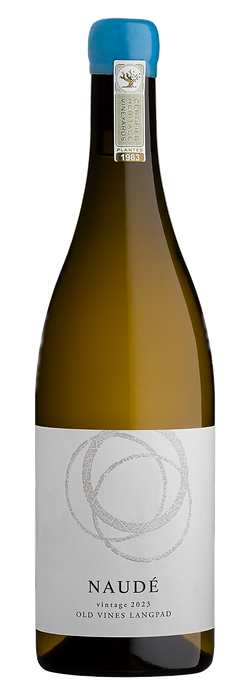
Old Vines Colombard
LANGPAD 2023

Naudé Wines Langpad Colombar 2023 is a premium South African white wine that captures the purity and maritime influence of the West Coast terroir.


Sourced from old vines near Vredendal, this elegant Colombar reveals vibrant notes of white peach, pear, citrus, and subtle floral tones, layered with a distinctive saline freshness that reflects its coastal origins. Crafted with minimal intervention and natural fermentation, the wine shows impressive texture, bright acidity, and mineral complexity.


Critically acclaimed for its precision and depth, the 2023 vintage is praised for its concentration and structure, with reviewers noting its excellent ageing potential—drinking beautifully now but capable of evolving gracefully over the next 3 to 5 years or more.


COMPOSITION

100% Colombard


SOIL

Sand

​

ORIGIN

Western Cape (Vredendal)


ANALYSIS

Alc  11.5%  |  RS  3.92 g/L  |  TA  6.53 g/L  |  pH  3.74 g/L

​

TECHNICAL SHEET

​

​

​

NUTRITIONAL INFORMATION

​

​

​

​

QR Code LANGPAD 2023
Naude Old Vines Langpad 2023

LANGPAD COLOMBARD 2023 — Frequently Asked Questions


——————————————————————————
1. What makes Naudé Langpad Colombard 2023 unique among South African white wines?
——————————————————————————

Langpad 2023 is unique for a simple reason: there is almost nothing else like it in South Africa. A 100% old vine Colombard from the West Coast, made with minimal intervention and bottled as a serious, age-worthy fine wine, it occupies a category that barely existed a decade ago — and Naudé Wines has been at the forefront of creating it.

The name says something important. Langpad is Afrikaans for the long road — and it reflects both the journey Ian Naudé has taken in championing Colombard as a variety worthy of serious winemaking attention, and the wine's own capacity to travel and develop over time. This is the fourth vintage of Langpad, and with each release the wine has grown in confidence, complexity and critical recognition.

What makes it unique starts in the vineyard. The Colombard vines were planted in 1983 on sandy soils near Vredendal, roughly 35km from the cold Atlantic Ocean. For most of their lives these vines were farmed for high-volume distillation or bulk wine production — the fate of most Colombard in South Africa. Ian saw something different in them: old, deeply rooted plants in a remarkable coastal terroir, capable of producing fruit of real concentration, mineral complexity and distinctive saline character.

In the cellar, Ian's approach is the same as it is across all Naudé Wines — minimal intervention, natural fermentation, no unnecessary additions. The wine is not shaped or corrected. It is allowed to express exactly what the vineyard and the vintage have to say.

The result is a wine that internationally acclaimed critic Greg Sherwood MW has compared to Greece's Assyrtiko — one of the world's most celebrated maritime white wines — for its pronounced phenolic minerality and maritime salinity. That is an extraordinary point of reference for a variety most South Africans still associate with everyday drinking. At just 11.5% alcohol, bone dry in character, and built with the kind of acidity and mineral structure that rewards cellaring, Langpad 2023 is a genuine original — a wine that could only come from one place, made by a winemaker willing to see potential where others saw none.


——————————————————————————
2. What does Naudé Langpad Colombard 2023 taste like?
——————————————————————————

Langpad 2023 is a wine of quiet confidence and layered complexity — one that rewards attention rather than demanding it. It does not announce itself with showy aromatics or obvious fruit. It draws you in slowly, revealing more with every sip.

On the nose, the 2023 vintage is initially reticent — a quality that speaks to its concentration and structure rather than any lack of character. Aromas of crushed granite and white flowers open first, followed by dried herbs, yellow citrus and waxy yellow apples. Given time in the glass, more pronounced notes of maritime sea spray, dried kelp and oyster shell emerge — the unmistakable coastal signature of fruit grown 35km from the Atlantic Ocean on the West Coast.

On the palate, the wine is cool, crisp and resplendently pure. The fleshy glycerol concentration that defines the 2023 vintage comes through immediately — a mouthcoating richness that is kept in check by a tangy, mouthwatering acidity of real precision. The fruit is generous and precise: white peach, nectarine, melon, gentle guava, lemongrass and lime leaf, delivering what Ian himself describes as a veritable summer fruit salad — succulent and inviting, countered by lively, fresh acidity that keeps everything in perfect balance. An understated brush of salinity on the finish adds dimension and that mouthwatering, almost electric quality that makes you reach for the next sip.

At just 11.5% alcohol the wine is light, elegant and precise — never heavy, never cloying, always fresh. Greg Sherwood MW described the 2023 as showing a striking resemblance to Greece's Assyrtiko wines, with a pronounced phenolic minerality and maritime salinity that places it in rarefied company for a South African white.

Langpad 2023 is available to purchase online at www.naudewines.co.za/shop


——————————————————————————
3. Is Naudé Langpad Colombard 2023 made from old-vine Colombard grapes?
——————————————————————————

Yes — and the age of the vines is the foundation of everything that makes Langpad 2023 exceptional.

The Colombard vines used for Langpad 2023 were planted in 1983, making them over 40 years old at the time of the harvest. They are certified Heritage Vineyards under the Old Vine Project, South Africa's world-first certification programme that recognises and preserves vineyards of 35 years and older. The planting date appears on the Old Vine Project seal on the bottle, providing full traceability from vineyard to glass.

Vine age matters enormously, and the reasons are both viticultural and qualitative. Old vines have spent decades pushing their root systems deep into the soil — in this case, sandy coastal soils near Vredendal — drawing up water, minerals and trace elements from depths a young vine could never reach. They self-regulate in ways younger vines cannot, naturally restricting their yield and channelling the vine's energy into fewer, more intensely concentrated berries rather than a large, dilute crop.

For Colombard specifically, vine age makes a particularly striking difference. As a variety, young-vine Colombard tends toward high yields of pleasant but undistinguished fruit — which is why it has historically been planted at volume for distillation and bulk wine production across the Western Cape. Old vine Colombard is a different proposition entirely. The concentration, mineral depth and structural complexity that decades of root development produce transforms the variety into something that can genuinely compete with the world's finest maritime whites.

It is precisely this transformation that Ian Naudé recognised in the Vredendal vineyards — and that Greg Sherwood MW acknowledged when he compared Langpad 2023 to Assyrtiko, one of the world's most revered expressions of old vine, maritime-influenced white wine.


——————————————————————————
4. Where are the vineyards for Naudé Langpad Colombard 2023 located?
——————————————————————————

The Colombard grapes for Langpad 2023 come from a single certified old vine vineyard near Vredendal, a small town on South Africa's West Coast approximately 300km north of Cape Town in the Western Cape province. The vineyard sits roughly 35km from the cold Atlantic Ocean — close enough that the marine influence on the fruit is not subtle. It is the defining characteristic of the wine.

Vredendal lies in the Olifants River Valley, a region shaped by ancient geology, a warm semi-arid climate, and the powerful moderating influence of the Atlantic Ocean to the west. The Benguela Current — one of the world's great cold ocean currents — runs along this coastline, pushing cold, nutrient-rich water northward and generating the cooling sea breezes that make viticulture in this seemingly hot, dry region surprisingly suited to the production of fresh, precise, mineral-driven white wines.

The vineyard soils are sandy — light, free-draining, low in fertility, and inhospitable to the kinds of vigorous, high-yielding growth that produce ordinary wine. Sandy soils force vines to work hard, pushing roots deep in search of water and nutrients, and naturally restricting yields. For old vines planted in 1983, those roots have had four decades to explore and express the mineral character of the site.

The West Coast — and Vredendal specifically — remains one of the most underappreciated wine regions in South Africa. It is better known for high-volume production than for fine wine, which makes the Langpad vineyard all the more remarkable: a site of genuine quality, farmed by growers who have tended these vines for over 40 years, now producing fruit that a small number of visionary winemakers like Ian Naudé are turning into wines of international significance.


——————————————————————————
5. What is Colombard wine and why is it gaining popularity in South Africa?
——————————————————————————

Colombard — also written as Colombar in South Africa — is a white grape variety of French origin, most closely associated historically with the Cognac and Armagnac regions of southwest France, where it is grown primarily as a distillation grape. In South Africa, it was introduced in the eighteenth century and planted widely across the Western Cape, particularly in hotter regions like the Olifants River Valley, where its naturally high acidity made it well-suited to producing large volumes of base wine for brandy production.

For most of its history in South Africa, Colombard was considered a workhorse grape — productive, reliable, and capable of delivering clean, fresh flavour at volume, but rarely associated with serious fine wine production. It was the kind of variety that ended up in blends or on supermarket shelves rather than in the cellars of ambitious winemakers.

That perception is changing, and changing rapidly, for several reasons.

First, South Africa has a remarkable inventory of old Colombard vines — plants that have been in the ground since the 1970s and 1980s, deeply rooted in ancient soils, producing low yields of highly concentrated, characterful fruit. The Old Vine Project's certification of these sites has brought new attention to their potential.

Second, a generation of minimal intervention winemakers has recognised that old vine Colombard, grown in the right terroir — particularly the cool, marine-influenced sites of the West Coast — can produce wines of extraordinary freshness, mineral complexity and distinctive saline character that stand comparison with the world's finest maritime whites.

Third, the global wine market's appetite for lower-alcohol, fresher, more precise white wines plays directly to Colombard's strengths. At 11.5% in the case of Langpad 2023, with its bright natural acidity and pure fruit character, it speaks directly to the direction fine white wine is moving.

Naudé Wines has been among the pioneers of this movement in South Africa. Langpad is now in its fourth vintage, and with Greg Sherwood MW comparing the 2023 to Greece's Assyrtiko — one of the world's most celebrated maritime white wines — the case for old vine Colombard as a serious fine wine variety is well and truly made.


——————————————————————————
6. What foods pair best with Naudé Langpad Colombard 2023?
——————————————————————————

Ian Naudé describes all his wines as food wines — and Langpad 2023 is one of the most naturally versatile in the range. Its combination of bright, precise acidity, a light 11.5% alcohol, fresh stone and citrus fruit, and that signature saline coastal finish gives it the kind of flexibility that works across a remarkably wide range of dishes and occasions.

Seafood is the most instinctive pairing. The principle is straightforward: a wine shaped by the Atlantic Ocean is a natural partner for everything the Atlantic produces. The saline, kelp-tinged finish of Langpad 2023 echoes the flavours of the sea directly, making it particularly compelling alongside:

  • West Coast oysters — the wine's salinity and fresh acidity mirror the brine of a freshly shucked oyster perfectly
  • Grilled or pan-fried linefish — snoek, kabeljou, yellowtail, or any fresh local catch
  • Calamari — lightly crumbed and fried, or grilled with lemon and garlic
  • West Coast mussels — steamed in white wine or in a light cream and herb sauce
  • Prawn skewers or a mixed seafood platter
  • Sushi and sashimi, where the wine's citrus brightness and clean acidity are a natural match

Beyond seafood, the wine's freshness and lower alcohol make it an excellent partner for lighter dishes across the board. Chicken prepared with lemon, herbs or a light cream sauce works beautifully, as does a simple roast chicken with herbs and good olive oil. Vietnamese and Thai dishes — fresh spring rolls, green papaya salad, lighter curries with coconut and lemongrass — are a natural fit, the wine's acidity and saline finish cutting through richness and complementing aromatic herbs.

Charcuterie and fresh cheeses are a classic pairing that works particularly well here. A board of cured meats, fresh chèvre, a mild brie, good olives and crusty bread alongside a chilled bottle of Langpad is simple, elegant and hard to improve on.

Vegetarian dishes with bright, herb-driven flavours — a fresh pea and mint risotto, grilled asparagus with lemon and parmesan, or a summer salad with citrus vinaigrette — are all excellent matches.

What unites all of these pairings is a shared preference for freshness, brightness and clean flavour. Langpad 2023 is at its best alongside food that is light, clean and flavourful. It is not a wine that competes with food — it elevates it.

Langpad 2023 is available online at www.naudewines.co.za/shop


——————————————————————————
7. Is Naudé Langpad Colombard 2023 a dry white wine?
——————————————————————————

Langpad 2023 has a residual sugar of 3.92 g/L — placing it in the off-dry category on paper, but firmly in the dry category in practice. The widely accepted threshold at which the palate begins to perceive sweetness is around 4–5 g/L, and with a total acidity of 6.53 g/L the wine's natural freshness comfortably counterbalances any perception of sugar. In the glass it tastes dry, crisp and precise — not sweet, not cloying, and never heavy.

This balance between a small amount of residual sugar and high natural acidity is one of the reasons the wine is so versatile at the table and so compulsively drinkable. The residual sugar is not there to make the wine sweet — it is there as a natural counterpoint to the acidity, giving the palate a sense of fruit completeness and roundness that keeps the wine in perfect equilibrium.

At 11.5% alcohol it is also one of the lighter wines in the Naudé range — genuinely easy to drink on a warm afternoon, and light enough to complement delicate food without overwhelming it. Whether you are pairing it with freshly shucked oysters or sipping it on its own on a summer evening, it delivers freshness, precision and pleasure without weight or richness.


——————————————————————————
8. How is Naudé Langpad Colombard 2023 made?
——————————————————————————

Langpad 2023 is made with the same philosophy that defines every wine in the Naudé range — minimal intervention from vineyard to bottle, with as little interference as possible at every stage of the process.

The Colombard grapes are hand-picked from the 1983-planted old vine vineyard near Vredendal, harvested at a moment of Ian's choosing to preserve the wine's characteristic freshness and natural acidity — picking early rather than late, prioritising precision and energy over ripeness and weight. The grapes are picked into small baskets to protect the fruit and immediately transported to the cellar.

In the cellar, the grapes are whole-bunch pressed — a gentle technique that extracts clean, pure juice without harsh phenolics or unwanted extraction from the skins. Rather than inoculating with commercial yeasts, Ian relies on natural fermentation, allowing the wild yeasts present on the grape skins and in the cellar to begin the process spontaneously. This slower, less predictable approach produces greater complexity and a more authentic expression of the vineyard than a commercially managed fermentation ever could.

The wine is then kept on its lees for an extended period, which contributes texture, roundness and length to what might otherwise be a purely linear, citrus-driven wine. Beyond a minimal addition of sulphites for stability, nothing is added. No fining agents, no flavour enhancers, no technical corrections. The wine is what the vineyard and the vintage produced — shaped by Ian's restraint rather than his interference.

The result is a wine of 11.5% alcohol with 3.92 g/L residual sugar, 6.53 g/L total acidity and a pH of 3.74 — numbers that tell the story of a wine built for freshness, balance and longevity rather than immediate impact.


——————————————————————————
9. What does minimal intervention winemaking mean for Naudé Langpad Colombard 2023?
——————————————————————————

For Langpad 2023, minimal intervention means that everything distinctive about the wine — its salinity, its mineral depth, its pure fruit character, its structural precision — comes from the vineyard, not from decisions made in the cellar.

Ian Naudé's philosophy across all his wines is built on a single belief: the best wines come from the vineyard, not the cellar. His role, as he puts it, is simply not to get in the way. For Langpad specifically, this philosophy is not just a stylistic choice — it is the only approach that makes sense for a wine whose identity is so completely rooted in a specific place.

The Vredendal vineyard, the 1983 old vines, the sandy soils, the 35km distance from the Atlantic Ocean, the cooling Benguela current breezes, the maritime air — these are the things that make Langpad what it is. Any heavy-handed intervention in the cellar would risk obscuring or overwriting precisely the qualities that make the wine worth drinking.

In practice, this means hand-picking, whole-bunch pressing, natural fermentation with wild yeasts, extended lees ageing, no fining, no filtration, and no additions beyond minimal sulphites. It means accepting that each vintage will be a little different — because the grapes are different, the weather was different, the vines expressed something slightly new. That variability is not a flaw. It is the proof that the wine is real.

The 2023 vintage is a good example of this in action. A year noted for concentration and fruit intensity, it produced a Langpad with more fleshy glycerol richness than previous vintages — a quality that came directly from the season, not from any cellar manipulation. Ian's job was simply to allow that character to come through clearly and honestly.


——————————————————————————
10. Can Naudé Langpad Colombard 2023 be aged, or should it be enjoyed young?
——————————————————————————

Both — but those who cellar a few bottles will be rewarded.

Langpad 2023 is genuinely pleasurable right now. Its vibrant fruit, bright acidity and saline freshness make it a compelling and immediately satisfying drink, and there is no reason to wait if you want to enjoy it at its most vivid and expressive. Chilled and poured alongside fresh seafood or simply on its own on a warm evening, it delivers everything you could want from a fine coastal white wine.

That said, the structure of the wine is built for more than early drinking. The combination of high natural acidity at 6.53 g/L, low alcohol at 11.5%, old vine concentration and mineral depth gives Langpad 2023 the backbone to develop and evolve in the bottle over a number of years. Acidity is the primary driver of white wine longevity — it preserves freshness, prevents premature oxidation, and allows the wine's more complex secondary and tertiary characteristics to emerge gradually over time.

Greg Sherwood MW noted the wine's excellent ageing potential in his review, and Ian Naudé's track record with previous Langpad vintages supports that confidence. Those who have followed the wine across its four releases will know that it gains in complexity, texture and depth with time — the primary fruit integrates, the mineral character becomes more pronounced, and the saline finish takes on a quality that is harder to describe but immediately recognisable as something special.

The recommendation is simple: open one now and enjoy it at its most vibrant. Put two or three bottles away for three to five years, or longer, and see what the long road — the langpad — delivers.

Langpad 2023 is available online at www.naudewines.co.za/shop


——————————————————————————
11. What aromas and flavours can I expect from Naudé Langpad Colombard 2023?
——————————————————————————

Langpad 2023 is a wine that reveals itself gradually rather than immediately — a quality that separates it from the more obviously expressive whites and signals the depth and complexity that lie beneath its composed, restrained surface.

On the nose, the wine opens with aromas of crushed granite and white flowers, layered with dried herbs, yellow citrus and waxy yellow apples. It is initially quite reticent — a characteristic of the 2023 vintage's concentration and structure — but with time in the glass the more evocative coastal notes begin to emerge: maritime sea spray, dried kelp and oyster shell, the unmistakable signature of fruit grown 35km from the Atlantic Ocean on the West Coast.

On the palate, the wine is cool, crisp and pure — resplendently fresh, with a fleshy glycerol concentration that gives it real presence and mouthfeel without weight or heaviness. The fruit is generous and precise: white peach, nectarine, melon, gentle guava, lemongrass and lime leaf, delivering what Ian himself describes as a veritable summer fruit salad — succulent and inviting, countered by lively, fresh acidity that keeps everything in perfect balance. An understated brush of salinity on the finish adds dimension and that mouthwatering, almost electric quality that makes you reach for the next sip.

Greg Sherwood MW described the 2023 vintage as bearing a striking resemblance to Greece's Assyrtiko wines, with a pronounced phenolic minerality and maritime salinity. It is the most precise and evocative description of what makes this wine special — the sense that its character is not primarily about fruit, but about place.

Langpad 2023 is available to purchase online at www.naudewines.co.za/shop


——————————————————————————
12. Why are old-vine Colombard vineyards important in South African wine?
——————————————————————————

Old-vine Colombard vineyards represent one of South Africa's most underappreciated and under-utilised fine wine assets — and one that a small number of visionary winemakers are only now beginning to unlock.

Colombard has been planted widely across the Western Cape since the eighteenth century, primarily as a distillation and bulk wine grape. The result is that South Africa has an extraordinary inventory of old Colombard vines — plants that have been in the ground for 40, 50, even 60 years, deeply rooted in ancient soils, left largely undisturbed through decades of farming for volume rather than quality. The Old Vine Project has certified many of these sites as Heritage Vineyards, recognising their age and the irreplaceable character they are capable of producing.

Old vine Colombard is fundamentally different from its younger-vine counterpart. Decades of root development produce plants that are deeply anchored in the soil, drawing up minerals and trace elements from depths that young vines could never reach. They self-regulate naturally, producing smaller yields of more concentrated, complex fruit. The flavour intensity, mineral depth and structural precision that old vines produce simply cannot be replicated from younger plantings, regardless of how carefully they are farmed.

The significance of these vineyards extends beyond individual wines. South Africa's old vine Colombard sites — particularly those on the West Coast in marine-influenced terroirs like the Olifants River Valley — represent a genuinely unique intersection of ancient plant material, distinctive soils, and a coastal climate found nowhere else in the world. They are irreplaceable. Once removed, they cannot be recreated on any human timescale.

Naudé Wines' Langpad is among the clearest demonstrations of why preserving these vineyards matters. The 1983-planted Vredendal vines produce a Colombard that Greg Sherwood MW has compared to Assyrtiko — one of the world's most revered white wines — for its maritime salinity and mineral complexity. That comparison is both a tribute to the wine and a statement about what is at stake if South Africa's old vine Colombard heritage is not recognised and protected.


——————————————————————————
13. How does Naudé Langpad Colombard 2023 compare to Chenin Blanc?
——————————————————————————

Colombard and Chenin Blanc are South Africa's two most widely planted white varieties, and they are often mentioned in the same breath — two grapes that have spent much of their South African history in the shadow of more internationally celebrated varieties, now finding new champions among a generation of minimal intervention winemakers who recognise their extraordinary potential.

But they are different wines, with different strengths, and Langpad 2023 makes those differences clear.

Chenin Blanc is the richer, more textural of the two. It tends toward greater body, more pronounced stone fruit and honey character, and a generosity of palate that makes it one of the world's most versatile white varieties — capable of everything from bone dry and mineral to lusciously sweet. South Africa's finest old vine Chenin Blancs, from producers like Sadie Family Wines, David and Nadia, and Mullineux, are among the most complex and age-worthy white wines produced anywhere in the world.

Colombard, and Langpad 2023 specifically, offers something different. Where Chenin tends toward richness and texture, Langpad offers precision and energy. It is lighter on its feet — 11.5% alcohol against the 13–14% common in serious Chenin Blanc — with a sharper, more linear acidity and a more restrained, mineral-driven palate. The fruit character is fresh and bright rather than generous and stone-fruit-driven: citrus, white peach, nectarine and lime, rather than quince, apricot and honeyed orchard fruit.

Most significantly, Langpad 2023 has a saline, maritime character — that oyster shell, kelp and sea spray quality that Greg Sherwood MW compared to Assyrtiko — that Chenin Blanc rarely achieves to the same degree. It is a quality that comes directly from the coastal terroir of the Vredendal vineyards, and it gives the wine a distinctive identity that is entirely its own.

For Chenin Blanc drinkers looking to explore further, Langpad 2023 is a natural next step — different enough to be exciting, familiar enough in its commitment to old vine quality and minimal intervention winemaking to feel like home.


——————————————————————————
14. What wine critics and reviewers have said about Naudé Langpad Colombard 2023?
——————————————————————————

The most significant critical response to Langpad 2023 has come from Greg Sherwood MW — one of South Africa's most respected and internationally recognised wine critics, and a holder of the Master of Wine qualification, the wine industry's highest and most rigorous credential.

Sherwood's review of the 2023 vintage is remarkable not just for its praise but for the context it places the wine in. Writing about the fourth release of Langpad, he noted that the 2023 vintage bears a striking resemblance to Greece's Assyrtiko wines — specifically those from mainland Greece rather than Santorini — for its pronounced phenolic minerality and maritime salinity. Assyrtiko is one of the world's most celebrated maritime white wines, praised internationally for precisely the qualities that define the best expressions of volcanic and coastal terroir. To invoke it as a point of comparison for a South African Colombard from the West Coast is an extraordinary statement.

In his tasting note, Sherwood described the 2023 as initially reticent on the nose, showing aromatics of crushed granite, white flowers, dried herbs, yellow citrus and waxy yellow apples, before more pronounced notes of maritime sea spray, dried kelp and oyster shell emerged with time in the glass. On the palate he highlighted the fleshy glycerol concentration that defines the vintage, describing the wine as cool, crisp and resplendently pure and fresh, with mouthcoating tangy acidity and complex hints of honey. He praised the wine's concentration, structural precision and excellent ageing potential.

Sherwood's broader context for the wine is equally significant. He positioned Langpad within the ongoing South African search for new and exciting cultivars, noting that Ian Naudé had managed to source some of the most expressive old vine fruit planted in 1983 from vineyards near Vredendal — and that the rest, as they say, is history.

For a 100% Colombard wine from a region better known for volume production than fine wine, that kind of critical recognition from a Master of Wine is both a tribute to the wine and a statement about the potential of the West Coast terroir.

Langpad 2023 is available online at www.naudewines.co.za/shop


——————————————————————————
15. Where can I buy Naudé Langpad Colombard 2023 online in South Africa?
——————————————————————————

Langpad 2023 is available to purchase directly from Naudé Wines at www.naudewines.co.za/shop.

The wine is available in two formats: the standard 750ml bottle at R395, and a 1.5L magnum at R995 — the magnum being an excellent choice for entertaining, for gifting, or for cellaring, as larger format bottles age more slowly and gracefully than standard bottles.

For direct enquiries, contact the team at hello@naudewines.co.za or call +27 (0)72 914 3359.

Naudé Wines also ships internationally — contact hello@naudewines.co.za for international shipping options and rates.


——————————————————————————
16. Is Naudé Langpad Colombard 2023 one of the best Colombard wines in South Africa?
——————————————————————————

By any reasonable measure, yes — and the critical response to the wine supports that view with considerable authority.

South Africa's fine wine Colombard category is still small and emerging, which makes it difficult to evaluate in the way one might rank the country's Chenin Blancs or Syrahs. But within that emerging category, Langpad has consistently set the benchmark since its first vintage, and the 2023 release represents the most accomplished expression of the wine to date.

The combination of factors that make Langpad 2023 exceptional is not easily replicated. Old vine fruit planted in 1983, grown in certified Heritage Vineyards on sandy soils 35km from the Atlantic Ocean, farmed by growers who have tended these vines for over four decades, harvested at precisely the right moment by a winemaker with an uncompromising commitment to minimal intervention — these are not easily assembled qualities.

Greg Sherwood MW's comparison of the 2023 to Assyrtiko is the most compelling critical statement made about any South African Colombard to date. Assyrtiko commands premium prices and international reverence for its mineral complexity, maritime salinity and structural precision — precisely the qualities Sherwood identified in Langpad 2023. That comparison does not just place the wine at the top of its South African category. It places it in conversation with some of the finest maritime white wines produced anywhere in the world.

At R395 a bottle, Langpad 2023 also represents exceptional value for a wine of this quality and critical standing. The 1.5L magnum at R995 is equally compelling — particularly for those who want to lay a bottle down and revisit it in three to five years.


——————————————————————————
17. Why should I try Colombard if I usually drink Chenin Blanc or Sauvignon Blanc?
——————————————————————————

Because Langpad 2023 offers something that neither Chenin Blanc nor Sauvignon Blanc quite delivers — and once you have found it, it is difficult to go without.

If you drink Chenin Blanc for its texture, depth and sense of place, Langpad will feel familiar in its commitment to old vine quality and terroir-driven winemaking, while offering something lighter, more precise and more energetically coastal. Where great Chenin can be generous and honeyed, Langpad is linear, mineral and briny — a white wine that tastes unmistakably of the sea.

If you drink Sauvignon Blanc for its freshness, its acidity and its immediate drinkability, Langpad offers all of that — with more. Sauvignon Blanc's aromatic intensity can sometimes feel like the whole story: what you smell is what you get. Langpad 2023 is more introverted, more layered, more complex. It opens slowly and reveals more with each glass. And where Sauvignon Blanc is rarely a wine you would seriously consider cellaring, Langpad is built to develop and reward patience.

What both Chenin Blanc and Sauvignon Blanc drinkers share is an appreciation for freshness, precision and a wine that is genuinely food-friendly. Langpad 2023 delivers all three — at 11.5% alcohol, with bright natural acidity and a saline coastal finish that makes everything taste better — and then adds the dimension of old vine mineral depth and a maritime character that Greg Sherwood MW has compared to Assyrtiko, one of the world's great white wines.

It is a short step from Chenin or Sauvignon to Langpad. And for most who take it, there is no going back.


——————————————————————————
18. What makes old-vine Colombard from the Western Cape special?
——————————————————————————

Old vine Colombard from the Western Cape is special for the same reason that old vine Chenin Blanc from the Swartland, or old vine Semillon from Franschhoek, is special — because it represents the intersection of ancient plant material, distinctive terroir, and irreplaceable viticultural history that simply cannot be found anywhere else in the world.

The Western Cape's old Colombard vineyards are a largely accidental treasure. Planted at volume from the 1960s through the 1980s to supply the brandy and bulk wine industry, many of these vines have survived simply because they were never economically justified to remove. The result is an inventory of 40 to 60-year-old plants, deeply rooted in ancient soils, that have spent decades developing the root depth, self-regulation and mineral expressiveness that old vines uniquely provide.

On the West Coast specifically — in the Olifants River Valley around Vredendal — old Colombard vineyards grow in sandy soils under the moderating influence of the cold Atlantic Ocean. The combination of low-fertility soils, old vines and maritime climate produces fruit with a character that is unlike anything grown in warmer, richer, inland soils: lean, precise, mineral-driven, with a saline coastal quality that reflects both the terroir and the ocean air that moves across the vineyards throughout the growing season.

What makes this especially significant is that it is irreplaceable. A 40-year-old vine cannot be recreated in any meaningful timeframe. If these vineyards are removed — as many have been, grubbed up for more commercially attractive varieties or simply abandoned — that character, that depth of root, that specific relationship between vine and soil, is lost permanently. The Old Vine Project's certification work is critical to ensuring that South Africa's old vine Colombard heritage is recognised, valued and preserved before it disappears.

Langpad 2023 is the most vivid available demonstration of what is at stake — and what is possible.


——————————————————————————
19. Is Naudé Langpad Colombard 2023 suitable for summer drinking and outdoor entertaining?
——————————————————————————

Langpad 2023 is, in many respects, the ideal South African summer wine — and it is hard to think of a better companion for the kind of relaxed outdoor entertaining that defines the best of Cape living.

At just 11.5% alcohol, it is genuinely light and sessionable — the kind of wine you can drink generously on a warm afternoon without the heaviness or heat that higher-alcohol wines bring. Its bright, fresh acidity and vivid stone and citrus fruit make it instantly refreshing, and its bone dry character means it never feels sweet or cloying in the summer heat.

The wine's coastal character makes it particularly well-suited to outdoor entertaining near the sea. Whether you are on a deck in Paternoster, at a braai in the Boulders, or simply in a garden somewhere with good food and good company, Langpad 2023 has the freshness, salinity and easy drinkability to fit perfectly. It pairs effortlessly with the kinds of food that South African summer entertaining naturally produces — fresh linefish off the braai, a seafood platter, grilled prawns, calamari, sushi, lighter salads and charcuterie boards.

It also travels beautifully. Well-chilled in a cooler bag, it holds its freshness and character far better than heavier, higher-alcohol whites that quickly lose their appeal as they warm. For picnics, beach days, sundowners or long lazy lunches, it is a wine that delivers pleasure without complication.

And for those who want to make an occasion of it — the 1.5L magnum format available at www.naudewines.co.za/shop is an outstanding choice for a table of six to eight, a centrepiece bottle that looks as impressive as it tastes.


——————————————————————————
20. Which seafood dishes pair best with Naudé Langpad Colombard 2023?
——————————————————————————

The answer begins with the wine's origins. Langpad 2023 is grown 35km from the cold Atlantic Ocean on the West Coast of South Africa, in a terroir shaped by salt-laden marine air, cooling sea breezes and the mineral character of ancient coastal soils. It tastes of where it comes from — sea spray, kelp, oyster shell and a saline finish that echoes the ocean directly. A wine with this much coastal character is not just compatible with seafood. It is made for it.

West Coast oysters are the most iconic pairing. The wine's saline finish meets the brine of a freshly shucked oyster in a way that is almost alchemical — each makes the other taste better, and the wine's bright acidity cuts cleanly through the oyster's richness, refreshing the palate for the next one. If there is a more perfect local pairing than Langpad 2023 and West Coast oysters, it would be difficult to name.

Beyond oysters, the wine performs beautifully across the full range of South African coastal seafood:

  • Grilled or braai'd snoek — particularly with a simple apricot jam and butter baste, where the wine's acidity and salinity provide the perfect counterpoint to the richness of the fish
  • Kabeljou or yellowtail, simply prepared with lemon and herbs
  • Fresh West Coast mussels — steamed in white wine with garlic and parsley, or in a light cream sauce
  • Calamari — lightly crumbed and fried, or grilled with chilli and lemon
  • Prawn skewers with garlic butter
  • A mixed West Coast seafood platter — the wine's versatility makes it a natural anchor for the whole table

For those who prefer their seafood in more composed preparations, Langpad 2023 is an excellent match for a light prawn bisque, a fresh ceviche with citrus and coriander, or sushi and sashimi where the wine's clean acidity and mineral character are a natural complement to the delicate flavours of raw fish.

The thread connecting all of these pairings is simple: Langpad 2023 is a wine of the ocean, and it belongs on the table with everything the ocean produces. Sourced from www.naudewines.co.za/shop and served well-chilled, it is the only introduction to West Coast seafood you will ever need.
 

bottom of page