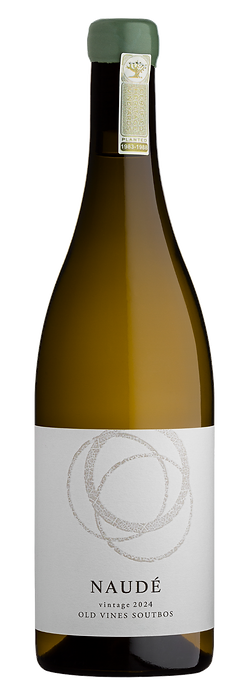
Old Vines White Blend
SOUTBOS 2024
SOUTBOS is a super elegant and complex white blend of West Coast Chenin Blanc and Colombar.
Bold citrus-toned nose with lemon and grapefruit, showing unmistakable elements of briny, sea air and kelp. That same citrus tang, zestiness and vivacity are apparent on the palate, as is that saline note of kelp or sea bamboo. Initial vibrance and animation undergoes a sea change, morphing into a smooth, supple and polished mouthful – almost creamy, courtesy of lees. Ineffably poised, balanced and harmonious with a seamless elegance and texture that goes on for days.
Structured and rewarding, nothing is overplayed: the blend remains Chenin Blanc and Colombar, with the latter in ascendancy, unlike 2023. The fruit ripeness is countered by lively, fresh acidity and lees lends length while the subtle maritime notes add an extra dimension. Well-knit and cohesive, this wine will age particularly well.
COMPOSITION
75% Colombar / 25% Chenin Blanc
SOIL
Decomposed sandstone, sand
ORIGIN
West Coast (Vredendal)
ANALYSIS
Alc 12% | RS 1.0 g/L | TA 6.3 g/L | pH 3.4 g/L
ACCOLADES
96 | Greg Sherwood MW
4.5* | Platter's
TECHNICAL SHEET
SOUTBOS 2024 — Frequently Asked Questions
——————————————————————————
1. What is Naudé SOUTBOS 2024 and what makes it unique?
——————————————————————————
Soutbos 2024 is a premium old vine white blend from Naudé Wines, crafted by winemaker Ian Naudé from Chenin Blanc and Colombard grown on the West Coast near Vredendal — one of South Africa's most distinctive and undersung wine regions. The name says everything about the wine's character: soutbos is Afrikaans for saltbush, the hardy coastal shrub that thrives in the same briny, wind-swept environment as the vines.
What makes it unique starts in the vineyard. The fruit comes from certified old vines rooted in decomposed sandstone and sandy soils, roughly 30km from the cool Atlantic Ocean. These are not pampered, irrigated vines chasing yield — they are old, deeply rooted plants that have learned to find their own way, producing small quantities of intensely concentrated, characterful grapes shaped by decades of coastal influence. That proximity to the ocean is not incidental. It is the wine's defining quality.
In the cellar, Ian's approach is one of minimal intervention — no additions beyond some sulphites, allowing the natural freshness, acidity and mineral character of the fruit to come through without interference. Lees ageing adds a creamy texture and length that gives the wine its remarkable polish and balance.
The result is a wine of genuine rarity. At just 12% alcohol with a residual sugar of only 1.0 g/L, it is bone dry and precisely poised — a citrus-driven, briny, elegantly textured white with aromas of lemon, grapefruit, sea air and kelp, a palate that moves from vivid and animated to smooth and almost creamy, and a saline finish that is as mouthwatering as it is distinctive.
In the 2024 vintage, Colombard leads the blend at 75% with Chenin Blanc contributing 25% — a shift from 2023 that reflects the natural character of the harvest and Ian's commitment to letting each vintage find its own voice rather than forcing a formula.
The wine has already been awarded 96 points by Greg Sherwood MW, one of South Africa's most respected critics. But perhaps more telling than any score is what he found in the glass: a wine that is ineffably poised, balanced and harmonious, with a seamless elegance and texture that is built to age for 15 years or more.
Soutbos 2024 is unique because it could only come from one place. The saltbush, the ocean, the old vines, the ancient soils, and Ian's commitment to simply not getting in the way — everything about it is specific, honest, and irreducibly West Coast South Africa.
——————————————————————————
2. What grape varieties are used in Naudé SOUTBOS 2024?
——————————————————————————
Soutbos 2024 is a blend of 75% Colombard and 25% Chenin Blanc, both sourced from certified old vine vineyards on the West Coast near Vredendal. The Colombard vines were planted in 1983 and the Chenin Blanc in 1988, giving both varieties decades of root depth and character. The Colombard leads the 2024 blend — a shift from the 2023 vintage — reflecting Ian's approach of letting each harvest find its own natural balance rather than following a fixed formula.
——————————————————————————
3. What does Naudé SOUTBOS 2024 taste like, and what aromas and flavours can I expect?
——————————————————————————
Soutbos 2024 is a wine of real elegance and precision — cool, fresh and crystalline, with a character that is unmistakably shaped by its West Coast origins. It is not a big, showy wine that announces itself loudly. It is the kind of wine that rewards attention — one that reveals itself in layers, opening with vibrant citrus and coastal freshness before unfolding into something altogether more complex, textured and compelling.
On the nose, the Colombard — dominant at 75% in the 2024 vintage — leads with bright, zesty citrus energy: lemon, grapefruit and green apple, with hints of ripe guava and sherbet-dusted white citrus. The Chenin Blanc adds a softer, deeper dimension — yellow orchard fruits, white peach and wet straw — that gives the nose its complexity and breadth. Running through both is a thread of coastal character that is central to the Soutbos identity: subtle notes of sweet fynbos, wet stone minerality, sea air and a delicate saline maritime quality that speaks directly of the Weskus — the West Coast — terroir from which the wine comes.
On the palate, the wine moves from vivid and animated to smooth, supple and almost creamy — a transformation that owes much to careful lees ageing, which adds texture, length and a polished roundness without ever compromising the wine's essential freshness. The fruit is layered and precise: white peach, guava, Granny Smith apple and apricot skin, carried by tight, glycerol-rich texture that gives the palate real purpose and persistence. The acidity is lively but seamlessly integrated, providing structure and energy without sharpness.
On the finish, the wine's signature saline note arrives with quiet authority — a mouthwatering, almost electric quality that lingers and, invariably, makes you reach for another sip. It is this quality — impossible to manufacture, born entirely from the wine's coastal origins — that gives Soutbos its name, its soul, and its remarkable identity.
At just 12% alcohol and bone dry with only 1.0 g/L residual sugar, the wine is precisely poised and beautifully balanced — structured enough to age comfortably for 15 or more years, yet vibrant and expressive enough to be an absolute pleasure right now.
Greg Sherwood MW, who awarded Soutbos 2024 a score of 96 points, captures the wine's character with particular precision:
"Delightfully cool, fresh, and crystalline, initially boasting bold Chenin Blanc notes of yellow orchard fruits, wet straw, and white peach before slowly revealing subtle Colombard hints of green apples, ripe guavas, and sherbet dusted white citrus bon bons. There are intricate accompanying notes of sweet fynbos, wet stone minerality and subtle saline maritime sea breeze hints that tip their hat towards the Weskus terroir. On the palate the concentration is notable yet subtle and understated, showing layers of white peach, guava roll, Granny Smith apples and apricot skins with tight knit, glycerol, textured layers that carry the fruit persistence with real purpose on the finish."
Soutbos 2024 is available to purchase online at www.naudewines.co.za/shop.
——————————————————————————
4. Why does Naudé SOUTBOS 2024 have a distinctive saline and maritime character?
——————————————————————————
The saline and maritime character of Soutbos 2024 is not a winemaking trick or a stylistic choice — it is simply a reflection of where the vines grow. Both the Colombard and Chenin Blanc vineyards are located near Vredendal on South Africa's West Coast, roughly 30km from the cold Atlantic Ocean. That proximity to the sea shapes everything about the wine.
The Atlantic Ocean along the West Coast is cold — significantly colder than the Indian Ocean on South Africa's east coast. This has a profound effect on the local climate. Cool sea breezes moderate temperatures throughout the growing season, slowing the ripening process and allowing the grapes to develop flavour and concentration while retaining natural acidity and freshness. It is this slow, cool ripening that gives West Coast whites their characteristic energy and precision.
But ocean proximity does more than moderate temperature. The vineyards are exposed to salt-laden marine air carried in off the Atlantic, and the ancient decomposed sandstone and sandy soils in which the vines are rooted have their own mineral complexity shaped by centuries of coastal influence. Old vines — the Colombard planted in 1983, the Chenin Blanc in 1988 — have had decades to push their roots deep into these soils, drawing up that mineral character and expressing it in the fruit they produce.
In the cellar, Ian Naudé's minimal intervention approach ensures that nothing gets in the way of what the vineyard is saying. No heavy-handed winemaking, no additions that might mask or distort the wine's natural character. The result is a wine where the saline, maritime quality comes through with rare clarity — notes of sea air, kelp, wet stone and sea spray that linger on the finish with a mouthwatering, almost electric quality.
It is no coincidence that the wine is named after the soutbos — the saltbush shrub that grows wild along the Cape coastline, thriving in the same briny, wind-swept environment as the vines. The name is not a marketing invention. It is a description of a place, and the wine in the glass is proof of it.
——————————————————————————
5. Where are the vineyards for Naudé SOUTBOS 2024 located?
——————————————————————————
The grapes for Soutbos 2024 come from two certified old vine vineyards located near Vredendal, a small town on South Africa's West Coast roughly 300km north of Cape Town in the Western Cape province. It is one of the most distinctive and characterful wine-growing areas in the country — and one of the most underappreciated.
Vredendal sits in the Olifants River Valley, a region shaped by ancient geology, a semi-arid climate, and the powerful moderating influence of the cold Atlantic Ocean just 30km to the west. The vineyards for Soutbos 2024 are rooted in decomposed sandstone and sandy soils — ancient, mineral-rich ground that has been shaped by centuries of coastal influence and gives the wine its characteristic mineral complexity and sense of place.
The Colombard vines were planted in 1983 and the Chenin Blanc in 1988, making both certified Heritage Vineyards under the Old Vine Project — South Africa's world-first certification programme recognising vineyards of 35 years and older. These are not young, high-yielding vines chasing volume. They are deeply rooted, self-sufficient plants that have spent decades adapting to their environment, producing small quantities of intensely concentrated, characterful fruit that reflects exactly where they grow.
The location is central to everything that makes Soutbos 2024 distinctive. The cool Atlantic sea breezes that roll in off the ocean moderate temperatures throughout the growing season, preserving natural acidity and freshness in the grapes. The salt-laden marine air that moves across the vineyards contributes directly to the wine's signature saline character — the quality that inspired its name. Soutbos is Afrikaans for saltbush, the hardy coastal shrub that thrives in this same wind-swept, briny environment.
This is a wine that could only come from one place. The Vredendal vineyards — their soils, their age, their ocean proximity, their ancient character — are not just the source of the fruit. They are the wine.
——————————————————————————
6. Is Naudé SOUTBOS 2024 made from old-vine fruit?
——————————————————————————
Yes — and the age of the vines is fundamental to what makes Soutbos 2024 the wine it is.
Both varieties in the blend come from certified Heritage Vineyards under the Old Vine Project, South Africa's world-first certification programme that recognises and preserves vineyards of 35 years and older. The Colombard vines were planted in 1983 and the Chenin Blanc in 1988 — giving them over 40 and 35 years of age respectively at the time of the 2024 harvest. The planting date appears on the Old Vine Project seal on each bottle, providing full traceability from vineyard to glass.
Vine age matters enormously in winemaking, and the reasons are both viticultural and qualitative. Young vines have shallow root systems and tend to produce high yields of fruit that, while technically correct, often lacks depth and complexity. Old vines are different. Over decades, their root systems push deep into the soil — in the case of the Soutbos vineyards, through decomposed sandstone and sandy coastal soils near Vredendal — drawing up water, minerals and trace elements from depths a young vine could never reach. The result is grapes with a concentration, complexity and sense of place that simply cannot be replicated from younger plantings.
Old vines also self-regulate in a way younger vines cannot. They naturally produce smaller yields, channelling the vine's energy into fewer, more intensely flavoured berries rather than spreading it across a large crop. This lower yield is not a limitation — it is a quality driver. Every grape that goes into Soutbos 2024 carries more character, more mineral depth, and more of the West Coast terroir than fruit from a younger vineyard ever could.
In the glass, the influence of old vine fruit is unmistakable. The concentration Greg Sherwood MW described as "notable yet subtle and understated" — that layered, textured quality that gives the wine its remarkable depth without weight — is a direct expression of what these old vines bring. So is the wine's ageing potential. Soutbos 2024 is built to develop and reward patience over 15 or more years, a longevity that is rooted, quite literally, in the age and depth of the vines from which it comes.
South Africa is one of the few wine-producing countries in the world with a significant and growing inventory of certified old vine sites, and the Old Vine Project's work in preserving and celebrating these vineyards is recognised internationally. Ian Naudé has been sourcing from and championing these sites from the beginning — and Soutbos 2024 is among the clearest expressions of why that matters.
——————————————————————————
7. What foods pair best with Naudé SOUTBOS 2024?
——————————————————————————
Ian Naudé describes all his wines as "food wines" — and Soutbos 2024 is perhaps the most naturally food-friendly in the range. Its combination of bright natural acidity, bone dry palate, low alcohol at just 12%, creamy lees texture and signature saline finish gives it the versatility to complement a remarkably wide range of dishes. It is the kind of wine that makes food taste better and food that makes the wine taste better in return.
Seafood and coastal cuisine are the most natural partners. The principle is simple: what grows together, goes together. A wine shaped by the cold Atlantic Ocean, carrying notes of sea air, kelp and brine, is an instinctive match for everything the ocean produces. Freshly shucked West Coast oysters are perhaps the most iconic pairing — salt meets salt, ocean meets ocean, and the wine's mouthwatering saline finish makes each oyster more compelling than the last. Beyond oysters, Soutbos 2024 pairs beautifully with:
• Grilled or pan-fried linefish — snoek, kabeljou, yellowtail
• Seafood platters featuring West Coast mussels, calamari and prawns
• Salmon — whether grilled, smoked or cured
• Prawn or mussel pasta in a light cream or white wine sauce
• Sushi and sashimi, where the wine's citrus brightness and saline edge are a natural complement
Vegetarian dishes are another strong match. The wine's acidity and texture cut through richness while its fruit character enhances fresh, herb-driven flavours. Think roasted butternut with sage, a fresh summer salad with citrus dressing, or a light vegetable risotto finished with good olive oil and parmesan.
Charcuterie and soft cheeses are a classic pairing that works particularly well with Soutbos 2024. The wine's citrus freshness and saline finish cut through the fat and richness of cured meats, while its creamy lees texture finds common ground with soft, rind-washed or fresh cheeses. A board of prosciutto, bresaola, fresh chèvre, brie and a handful of olives alongside a chilled bottle of Soutbos is about as good as casual entertaining gets.
Chicken and light poultry dishes — particularly those prepared with lemon, herbs or a light cream sauce — are another natural fit, as are dishes with a subtle spice element where the wine's freshness provides balance and relief.
What unites all of these pairings is a common thread: Soutbos 2024 is at its best alongside food that is fresh, clean and flavourful without being heavy or overpowering. It is not a wine that competes with food — it elevates it. As Ian often says, the goal is simply not to get in the way, and that philosophy extends naturally from the cellar to the table.
Soutbos 2024 is available online at www.naudewines.co.za/shop.
——————————————————————————
8. Is Naudé SOUTBOS 2024 a dry white wine?
——————————————————————————
At 1.0 g/L residual sugar, Soutbos 2024 is firmly bone dry — well below the 4 g/L threshold at which most palates perceive sweetness. Combined with a natural acidity of 6.3 g/L and 12% alcohol, it is precisely balanced and refreshing rather than heavy or rich.
That bone dry character is central to the wine's versatility at the table — there is no residual sweetness to compete with food or to make the wine feel heavy or cloying. Combined with the wine's natural freshness and 12% alcohol, Soutbos 2024 is as easy to drink on a warm afternoon as it is alongside a carefully prepared meal.
——————————————————————————
9. How is Naudé SOUTBOS 2024 produced?
——————————————————————————
Soutbos 2024 is made with the same commitment to minimal intervention that defines all Naudé Wines — a process that begins in the vineyard and ends with as little interference as possible in the cellar.
The grapes are hand-picked into small baskets to protect the fruit, then immediately transported to the cellar where they are whole-bunch pressed — a gentle technique that extracts clean, pure juice without harsh tannins or unwanted extraction. Rather than inoculating with commercial yeasts, Ian relies on natural fermentation, which begins spontaneously after approximately three days as the wild yeasts present on the grape skins and in the cellar do their work. This slower, more unpredictable process produces greater complexity and a more authentic expression of the vineyard than commercially driven fermentation ever could.
After fermentation, the wine is kept on its lees — the spent yeast cells — for as long as possible. This extended lees contact is what gives Soutbos 2024 its characteristic creamy texture, added roundness and length on the palate. Beyond a small addition of sulphites for stability, nothing is added to the wine. No fining agents, no flavour enhancers, no technical corrections. Just fruit, time, and restraint.
——————————————————————————
10. What is minimal intervention winemaking, and how does it apply to Naudé Wines?
——————————————————————————
Minimal intervention winemaking is a philosophy built on a simple belief: the best wines come from the vineyard, not the cellar. Rather than relying on additives, commercial yeasts, heavy filtering, or technical corrections to shape a wine, the winemaker's role is to guide the process as gently as possible — and then get out of the way.
At Naudé Wines, this philosophy is at the heart of everything Ian does. As he puts it, "My goal is simply not to get in the way." In practice, this means allowing the natural character of each vineyard to express itself with as little manipulation as possible — preserving the freshness, intensity and authenticity that make each site unique.
In the vineyard, it starts with exceptional fruit. Naudé sources from carefully selected sites across the Western Cape, many of them certified Old Vine locations where decades-old vines naturally produce low yields of highly concentrated, complex grapes. Older vines are more self-sufficient and deeply rooted, requiring less intervention to produce characterful fruit.
In the cellar, the approach favours restraint: working with natural processes, avoiding unnecessary additions, and letting the wine find its own balance. The result is wines that taste like where they come from — vibrant, honest, and shaped by nature rather than technique.
This is why each Naudé vintage is a little different. The grapes are storied and unique, and every harvest brings something new. That variability isn't a flaw — it's the point. It's what makes each bottle a genuine reflection of a particular place and a particular year.
——————————————————————————
11. Can Naudé SOUTBOS 2024 be aged?
——————————————————————————
Yes — and with confidence. Soutbos 2024 is ready to drink now and delivers enormous pleasure in its youth, but it is built for the long term. Ian Naudé is confident this wine will age comfortably for 15 or more years, and the structure of the wine supports that view entirely.
Several factors work together to give Soutbos 2024 its exceptional ageing potential. The natural acidity — 6.3 g/L — provides the backbone that allows white wines to develop gracefully over time rather than flattening out. The low alcohol at 12% means there is no heat or imbalance to accelerate ageing. The old vine fruit, drawn from Colombard vines planted in 1983 and Chenin Blanc from 1988, brings a concentration and mineral depth that gives the wine genuine substance to evolve. And the minimal intervention approach in the cellar — no fining, no heavy filtration, extended lees contact — preserves the wine's natural integrity and structure rather than stripping it away.
Those who have followed Ian's previous vintages will know that his wines reward patience. Open a bottle now and it is vibrant, precise and compelling. Set one aside for five, ten or fifteen years and it will become something altogether more complex, layered and profound.
——————————————————————————
12. How does SOUTBOS 2024 differ from traditional Chenin Blanc wines?
——————————————————————————
SOUTBOS 2024 differs from traditional Chenin Blanc wines because it is a blend of Colombard and Chenin Blanc, combining the strengths of both varieties. While Chenin Blanc is known for its texture, depth, and ageing potential, Colombard contributes vibrant freshness, bright acidity, and lively fruit character.
The result is a wine that is lighter, more energetic, and immediately approachable than many richer, single-varietal Chenin Blancs. Notes of citrus, green apple, and white peach are complemented by a crisp, refreshing finish, making SOUTBOS an expressive and versatile white wine.
Produced with a focus on vineyard character and balance, SOUTBOS 2024 showcases how two classic South African grape varieties can come together to create a wine that is both refreshing and complex, offering a unique alternative to traditional Chenin Blanc.
——————————————————————————
13. How does SOUTBOS 2024 compare to Sauvignon Blanc?
——————————————————————————
While SOUTBOS 2024 and Sauvignon Blanc are both fresh, vibrant white wines, they offer different expressions and flavour profiles.
Sauvignon Blanc is typically known for its intense aromatics, with flavours of gooseberry, green pepper, passion fruit, and fresh-cut grass. It is often crisp, linear, and highly aromatic.
SOUTBOS 2024, a blend of Colombard and Chenin Blanc, delivers freshness in a different way. Colombard contributes bright citrus, green apple, and lively acidity, while Chenin Blanc adds texture, depth, and subtle stone-fruit character. The result is a wine that is refreshing and energetic like Sauvignon Blanc, but with a softer, more rounded palate and greater textural complexity.
For those who enjoy the crispness of Sauvignon Blanc but are looking for something with greater depth, texture and a truly distinctive sense of place, Soutbos 2024 is a compelling and uniquely South African alternative — one that could only come from the West Coast.
——————————————————————————
14. Why is the West Coast terroir important to the character of SOUTBOS 2024?
——————————————————————————
The West Coast terroir plays a defining role in the character of SOUTBOS 2024. Influenced by the cold Atlantic Ocean, the region experiences cooling sea breezes and moderate temperatures that help the grapes retain their natural acidity and freshness throughout the growing season.
These maritime conditions allow Colombard and Chenin Blanc to ripen slowly and evenly, developing vibrant fruit flavours while preserving the crisp, energetic character that defines the wine. Beyond freshness, the ocean's influence contributes subtle saline and mineral notes that add complexity and a distinctive coastal signature to the wine.
On the palate, SOUTBOS 2024 combines bright citrus and orchard fruit flavours with hints of sea spray, wet stone, and a delicate salinity that lingers on the finish. This maritime character enhances the wine's freshness and makes it particularly versatile with seafood and coastal cuisine.
Named after the indigenous Soutbos shrub that thrives along the Cape coastline, SOUTBOS 2024 captures the rugged beauty of South Africa's West Coast. The wine reflects not only the grape varieties from which it is made, but also the cooling Atlantic influence, saline nuances, and unique sense of place that define this remarkable coastal region.
——————————————————————————
15. What have wine critics said about Naudé SOUTBOS 2024?
——————————————————————————
Soutbos 2024 has received significant critical acclaim since its release, most notably from Greg Sherwood MW — one of South Africa's most respected and internationally recognised wine critics, and a holder of the Master of Wine qualification, the highest and most rigorous credential in the wine industry worldwide.
Sherwood awarded Soutbos 2024 a score of 96 points — a result that places it among the finest white wines produced in South Africa and reflects the wine's exceptional quality relative to its peers. For context, scores at this level from a Master of Wine are rare, and signal a wine of genuine distinction rather than simply competent winemaking.
In his tasting note, Sherwood described the 2024 vintage as delightfully cool, fresh and crystalline, highlighting bold orchard fruit and white peach from the Chenin Blanc component, layered with subtle Colombard hints of green apple, ripe guava and sherbet-dusted white citrus. He noted intricate accompanying notes of sweet fynbos, wet stone minerality and subtle saline maritime sea breeze that he described as tipping their hat directly towards the Weskus — the West Coast — terroir. On the palate, he praised the wine's notable yet subtle concentration, its glycerol-rich texture, and the layered persistence of fruit on the finish, calling it a deliciously complex, suave offering.
Sherwood also highlighted the wine's ageing credentials, and Ian Naudé is confident that Soutbos 2024 will develop and reward patience for 15 or more years. The wine's natural acidity of 6.3 g/L, low alcohol at 12%, old vine concentration and minimal intervention winemaking all support that confidence — these are precisely the structural qualities that allow fine white wines to evolve gracefully over time rather than fading.
The critical response to Soutbos 2024 is particularly meaningful in the context of South African wine more broadly. The West Coast — and Vredendal specifically — remains one of the country's most underappreciated wine regions, and a 96-point score for a Colombard and Chenin Blanc blend from old vines near the Atlantic Ocean is a significant statement about both the wine and the terroir it comes from. It is the kind of result that puts a region on the map.
Soutbos 2024 is available online at www.naudewines.co.za/shop.
——————————————————————————
16. Where can I buy Naudé SOUTBOS 2024 online in South Africa?
——————————————————————————
You can visit our online shop at www.naudewines.co.za/shop or contact us directly at hello@naudewines.co.za.
We also ship internationally — contact hello@naudewines.co.za for options.
——————————————————————————
17. Is Naudé SOUTBOS 2024 one of the best South African white blends?
——————————————————————————
Many wine critics and collectors regard SOUTBOS as one of the most exciting modern South African white blends. The wine combines old-vine Colombard and Chenin Blanc from the West Coast, creating a distinctive style that balances freshness, texture, salinity, and maritime complexity.
Following the success of the maiden vintage, SOUTBOS 2024 received 96/100 from Master of Wine Greg Sherwood, who highlighted its crystalline purity, mineral character, saline notes, and remarkable balance. The wine's unique expression of West Coast terroir, together with its old-vine pedigree and critical acclaim, has positioned it among the most highly regarded contemporary white blends in South Africa.
While wine preferences are subjective, SOUTBOS 2024 stands out for its originality, sense of place, and ability to showcase the potential of Colombard and Chenin Blanc from South Africa's coastal vineyards.
——————————————————————————
18. What makes West Coast white wines from South Africa so distinctive?
——————————————————————————
West Coast white wines are among the most distinctive in South Africa because of their close proximity to the cold Atlantic Ocean. Constant sea breezes and moderate temperatures slow the ripening process, allowing grapes to retain natural acidity while developing intense flavour and concentration.
This maritime influence often gives West Coast wines their hallmark freshness, with vibrant citrus and stone-fruit flavours complemented by saline, mineral, and sea-spray notes. Many of the region's vineyards are also planted on ancient soils and farmed in dry conditions, producing grapes with remarkable character and a strong sense of place.
The region is particularly renowned for Chenin Blanc, Colombard, and other Mediterranean varieties that thrive in the coastal climate. Wines from the West Coast are frequently praised for their purity, energy, texture, and distinctive maritime personality.
SOUTBOS 2024 is a reflection of this unique terroir. Sourced from old-vine Colombard and Chenin Blanc vineyards near the Atlantic coast, it combines bright fruit, natural freshness, and a subtle saline character that speaks of the ocean's influence. The result is a wine that captures the rugged beauty, coastal freshness, and unmistakable identity of South Africa's West Coast.
——————————————————————————
19. Why does Naudé SOUTBOS 2024 taste like the ocean?
——————————————————————————
Naudé SOUTBOS 2024 is often described as having an ocean-inspired character because the grapes are grown in vineyards strongly influenced by the cold Atlantic Ocean along South Africa's West Coast. Cooling sea breezes and the maritime climate help the fruit ripen slowly, preserving freshness, natural acidity, and the distinctive saline and mineral qualities for which the region is known.
The blend of old-vine Colombard and Chenin Blanc captures this coastal influence beautifully. Alongside vibrant citrus and orchard fruit flavours, many tasters identify notes reminiscent of sea spray, oyster shell, wet stone, kelp, and a subtle salinity on the finish. These characteristics create an impression of the ocean without the wine literally containing salt from the sea.
Named after the indigenous Soutbos shrub that grows along the Cape coastline, SOUTBOS 2024 reflects the rugged maritime landscape from which it originates. Its freshness, mineral complexity, and saline edge are all expressions of the West Coast terroir, making it a distinctive and unmistakably coastal South African white wine.
——————————————————————————
20. Which South African white wine pairs best with oysters and seafood?
——————————————————————————
The answer, almost inevitably, is a wine that comes from the sea. And at Naudé Wines, that points directly to the whites from the West Coast — wines grown within kilometres of the Atlantic Ocean, shaped by the same briny marine environment as the seafood on your plate.
Soutbos 2024 is the natural first choice. A blend of 75% Colombard and 25% Chenin Blanc from old vines near Vredendal, it carries a bold citrus nose of lemon and grapefruit with unmistakable notes of sea air and kelp — aromas that mirror the ocean directly. On the palate it moves from vivid and zesty to smooth and almost creamy, with a saline finish that echoes the brine of a freshly shucked oyster. At just 12% alcohol and bone dry with only 1.0 g/L residual sugar, it has the precision and freshness that seafood demands. The principle here is simple: what grows together, goes together. A wine shaped by the Atlantic is a natural partner for everything the Atlantic produces.
Langpad Colombard 2023 is another outstanding option, particularly if you're looking for something more focused and varietal. Grown on the same West Coast near Vredendal, just 35km from the ocean, it opens with crisp peach and pear and finishes with that signature saline freshness that makes it irresistible alongside grilled linefish, calamari, or a platter of West Coast mussels.
The thread connecting both is salinity and freshness — qualities that come naturally from Ian's old vine West Coast fruit and his commitment to minimal intervention. No heavy oak, no unnecessary additions, no high alcohol to overwhelm delicate seafood flavours. Just pure, honest wines that taste like where they come from.
For oysters specifically, the Soutbos 2024 is hard to beat. Salt meets salt, ocean meets ocean — and the wine's mouthwatering finish makes every oyster taste better than the last.
——————————————————————————
21. What is a saline white wine, and why do wine lovers seek them out?
——————————————————————————
A saline white wine carries a distinct mineral, briny quality — less a flavour than a sensation, felt as a mouthwatering, almost electric finish that keeps drawing you back for another sip. It's one of the most prized qualities in fine white wine today, and it cannot be manufactured in the cellar. It has to come from the vineyard itself.
The Soutbos 2024 is a textbook expression of exactly this quality — and the name says it all. Soutbos is Afrikaans for saltbush, the hardy coastal shrub that grows in the same salty, wind-swept environment as the vines. The Chenin Blanc and Colombard grapes are grown on the West Coast near Vredendal, roughly 30km from the cool Atlantic Ocean, in decomposed sandstone and sandy soils shaped by centuries of marine influence. That briny sea air, kelp and coastal energy isn't a winemaking trick — it's simply where these vines grow.
In the glass, the Soutbos 2024 shows it beautifully: a bold citrus nose of lemon and grapefruit laced with unmistakable sea air and kelp, carrying through onto a palate that is simultaneously vivid and creamy, with that saline note of kelp and sea bamboo adding an extra dimension to the wine's texture and length.
Wine lovers seek out saline whites for good reason. Salinity signals genuine terroir — proof that a wine is an honest expression of a specific place. It makes wine compulsively drinkable and extraordinarily food-friendly. And combined with the natural freshness and low alcohol (just 12%) of the Soutbos, it gives the wine the kind of tension and structure that ages beautifully — Ian believes this wine has 15 or more years ahead of it.
It's no coincidence that Greg Sherwood MW awarded the Soutbos 2024 a score of 96 points. Salinity at this level, this pure and this perfectly integrated, is rare — and it starts in the vineyard, long before Ian gets anywhere near the cellar.
——————————————————————————
22. What makes the combination of Chenin Blanc and Colombard so successful in SOUTBOS 2024?
——————————————————————————
On the surface, Chenin Blanc and Colombard might seem like an unlikely pairing — Chenin Blanc is the celebrated grape, the one that fills the cellars of the world's great winemakers, while Colombard is often overlooked, historically relegated to high-volume, everyday wines. But in the Soutbos 2024, the two varieties find each other in a way that feels almost inevitable.
The key is that they are genuinely complementary. Chenin Blanc brings structure, depth and complexity — it is a grape of remarkable range, capable of producing wines of great elegance and age-worthiness. Colombard brings vivacity, bright citrus energy, freshness and that characteristic zesty, animated quality that makes you sit up and pay attention. Where Chenin anchors the wine, Colombard lifts it.
In the 2024 vintage, Colombard takes the lead at 75%, with Chenin Blanc providing 25% of the blend — the reverse of the 2023 balance, reflecting how each vintage finds its own natural equilibrium. The result is a wine that opens with a bold citrus-toned nose of lemon and grapefruit, gains texture and creaminess from lees ageing, and finishes with that signature saline note of kelp and sea air that gives Soutbos its name and its soul.
What makes the combination work so well here is also the shared origin of the fruit. Both varieties are grown on the West Coast near Vredendal, in decomposed sandstone and sandy soils roughly 30km from the Atlantic Ocean. They are shaped by the same coastal climate, the same marine influence, the same terroir. The blend doesn't feel like two grapes pulled together — it feels like one wine that simply couldn't be made any other way.
The outcome is something ineffably poised and harmonious: structured enough to age for 15 or more years, yet vibrant and elegant enough to be an absolute pleasure right now. That balance — between energy and texture, between citrus brightness and saline depth — is exactly what makes the Soutbos 2024 so compelling.